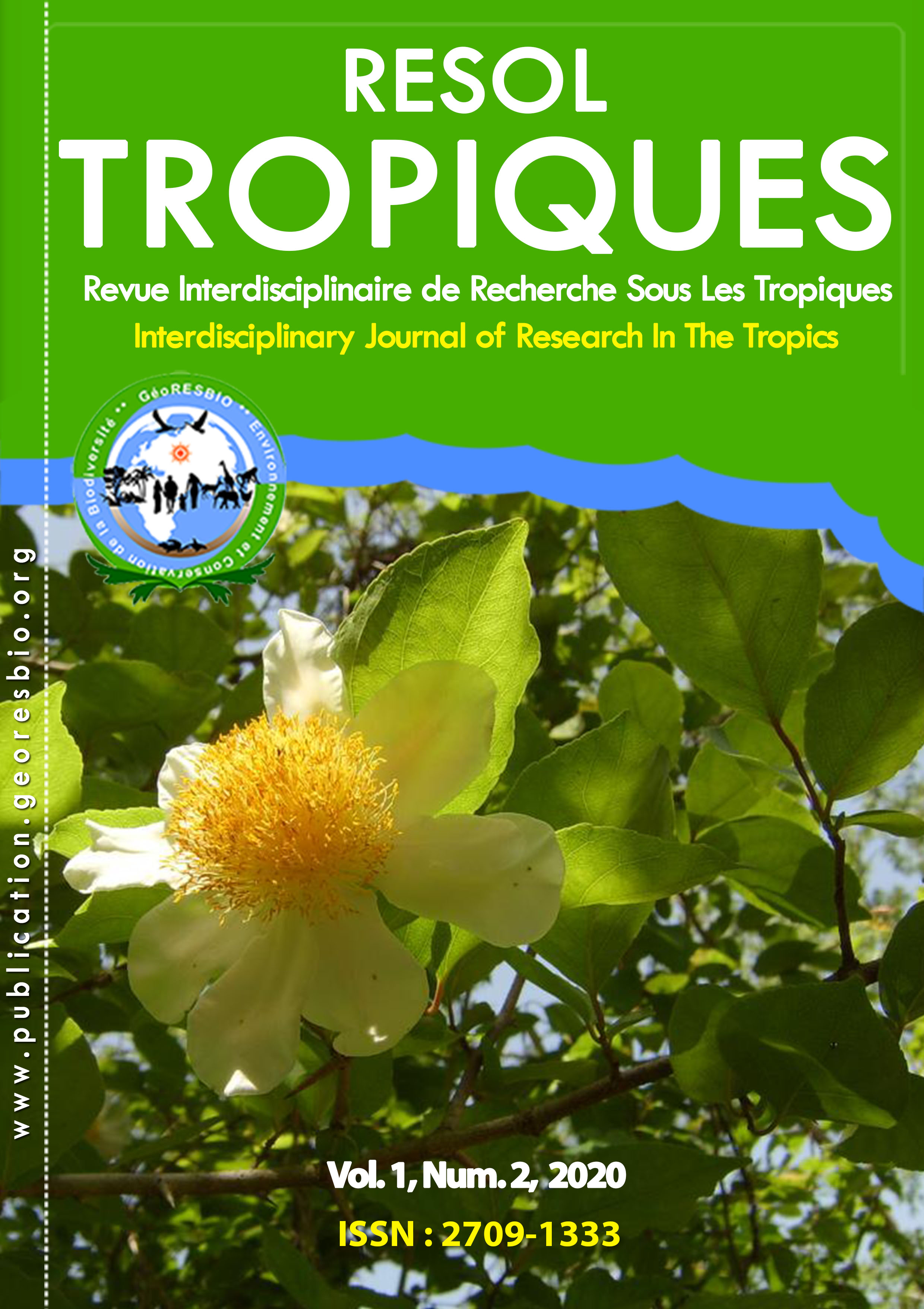
Ecosystem of the Ahouakro archaeological park put to the test with an anthropological approach to biodiversity conservation
Artikel-Sidebar
Hauptsächlicher Artikelinhalt
Abstract
Located in the West African tropical zone with a multicultural specificity, Côte d'Ivoire has immense assets in terms of biodiversity due to its coastal, forest and savannah geographical characteristics. However, many ecosystems remain fragile in the face of anthropic pressure despite the specialized management structures set up by the State. These structures are confronted with complex ethno-ecological variables that establish the ancestral relationship between the local populations and natural areas. In this sense, the Ahouakro Archaeological Park constitutes a special site that is full of natural assets with extraordinary landscape and geomorphological features which are still less explored and subject to progressive degradation. The present study aims to analyse the modalities for the sustainable conservation of this park from an anthropological approach to biodiversity conservation based on the diachronic analysis of the centuries-long relationship of the riparian populations to the natural environment. To achieve this, systematic interdisciplinary field surveys were carried out for a preliminary inventory of intrinsic characteristics and subsequent ecological processes. As a result, the bio-ecological and geoarchaeological components identified in the park ecosystem are governed by historical-cultural determinants whose sacredness, used as a traditional conservation mechanism, is annihilated by the dynamics of environmental reconfiguration. Therefore, the observed lack of a scientific approach to the exploitation of this park and its rich heritage leads to the construction of an ecomuseum development system as an integrated and adequate model for the sustainable conservation of biodiversity.
Artikel-Details

Dieses Werk steht unter der Lizenz Creative Commons Namensnennung 4.0 International.
Alle im Resol-Tropiques Journal veröffentlichten Artikel oder sonstigen wissenschaftlichen Beiträge werden unter den Bedingungen der internationalen Creative-Commons-Lizenz 4.0 verbreitet, die die Nutzung, Verbreitung und Vervielfältigung ohne Einschränkung der Unterstützung erlaubt, vorausgesetzt, Sie nennen den Namen des/der Originalautors/Autoren und die Quelle, geben einen Link zur Creative-Commons-Lizenz an und geben an, ob Änderungen vorgenommen wurden. Der Creative Commons Public Domain Disclaimer gilt für die in diesem Artikel zur Verfügung gestellten Daten, sofern nicht anders angegeben.